


Shop now
Constipation-predominant irritable bowel syndrome, commonly called IBS-C, involves more than changes in bowel movements. People may also experience abdominal pain, bloating, cramping, irregular bowel habits, and changes in daily comfort or quality of life.
Because IBS-C symptoms can vary from person to person, people may explore different approaches alongside healthy lifestyle habits and appropriate professional medical guidance.
Triphala is a traditional Ayurvedic formulation made from three fruits: Amla, Haritaki, and Bibhitaki. For people searching for information about Triphala and IBS-C, clinical evidence can provide useful product-specific context.
Vanan Triphala Capsules were evaluated in a 30-day, open-label clinical study registered with the Clinical Trials Registry–India. The study included 35 adults with constipation-predominant IBS. The findings provide clinical observations about the studied Triphala capsule formulation, while the study design and duration should be considered when interpreting the results.
What Is IBS-C?
IBS-C is a form of irritable bowel syndrome in which constipation is a prominent feature. The clinical summary associated with the study describes constipation-predominant IBS in relation to fewer than three spontaneous bowel movements per week, together with symptoms such as abdominal pain and bloating.
IBS-C can be persistent or recurring and may affect everyday activities, food choices and quality of life.
Persistent, severe, sudden or unexplained digestive symptoms should be evaluated by a qualified healthcare professional.
What Did the 30-Day Triphala Study Examine?
The study assessed changes in digestive symptoms, bowel-movement frequency and quality-of-life measures among 35 adults with IBS-C over 30 days.
It was an open-label, single-arm study. This means that participants knew they were taking the product and there was no separate placebo or comparison group.
This type of study can show how measurements changed during the study period. However, without a placebo or comparison group, it cannot establish with the same level of certainty as a randomised controlled trial that the product alone caused all of the observed changes. Factors such as diet, daily routine, expectations and natural changes in symptoms may also influence results.
Key Findings Reported in the Clinical Summary
The clinical summary reported changes across several measures by Day 30.
|
Study Measure |
Reported Observation |
|
IBS symptom-severity scores |
Improvements were reported across selected symptom measures. |
|
Spontaneous bowel movements |
An increase in bowel-movement frequency was reported during the study period. |
|
Quality of life |
Improvements were reported across the assessed IBS-QoL domains. |
|
Study duration |
30 days |
|
Participants |
35 adults with IBS-C |
|
Serious adverse events |
None reported during the study; mild, transient events were observed. |
The reported symptom-severity findings included assessments of abdominal pain, bloating, pain frequency, bowel habits and overall impact.
The clinical summary also reported that the average frequency of spontaneous bowel movements increased from 1.89 per week at baseline to 3.71 per week by Day 30.
These figures describe changes observed in the study population. They should not be interpreted as a prediction or guarantee of the same results for every person.
How Should These Findings Be Interpreted?
The reported changes provide product-specific clinical observations for the Triphala capsule formulation evaluated in the study.
However, the study had a relatively small sample size, lasted 30 days, and did not include a placebo or comparison group. Therefore, the findings should be considered within the context of the study design, participant population and study duration.
The results also should not be interpreted as evidence that Triphala treats or cures IBS-C.
Understanding the Three Fruits in Triphala
Triphala combines three traditionally used fruits:
1. Amla
Amla, also known as Indian gooseberry, is one of the three fruits traditionally used in Triphala. It contains naturally occurring polyphenolic and other plant compounds.
2. Haritaki
Haritaki is another traditional Triphala fruit and has a long history of use in Ayurvedic formulations.
3. Bibhitaki
Bibhitaki completes the three-fruit Triphala combination and contains naturally occurring plant compounds that contribute to the botanical profile of the formulation.
The clinical findings described in this article relate to the complete Triphala capsule formulation studied. They should not be interpreted as demonstrating that Amla, Haritaki or Bibhitaki individually produced the reported changes.
The Formulation Behind the Clinical Evaluation
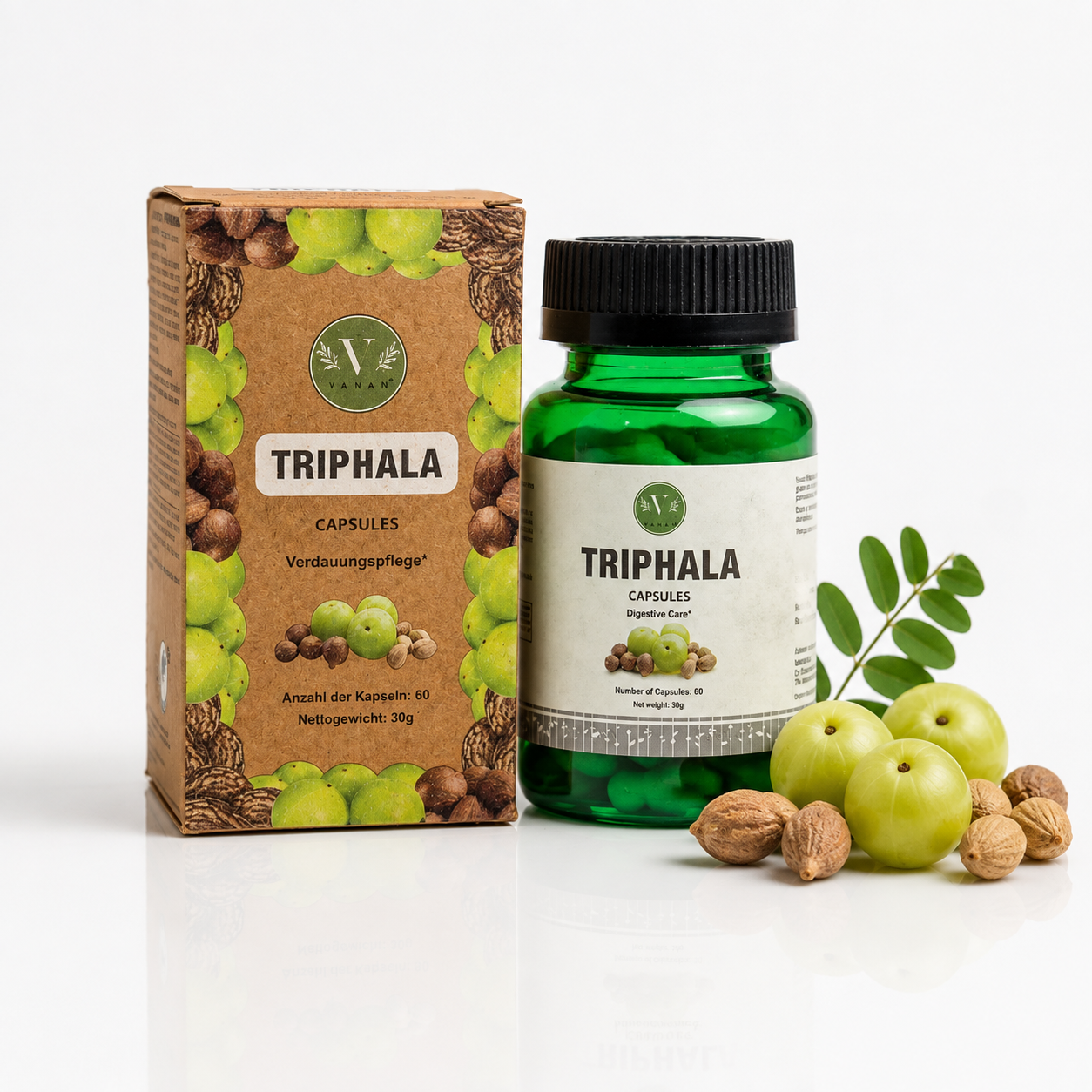
The studied product was Vanan Triphala Capsules, containing a total of 300 mg of Triphala extract, comprising:
-
100 mg Amla extract
-
100 mg Haritaki extract
-
100 mg Bibhitaki extract
The extracts are contained in a plant-based HPMC capsule shell. Suggested use is one capsule daily after breakfast, according to the product label.
For more information about the three fruits and the formulation, see our companion article, “Amla, Haritaki and Bibhitaki: Understanding the Three Fruits in Triphala.” You can also refer to the Vanan Herbal Triphala Capsules product page for current product information and directions for use.
What Else Can Support Digestive Regularity?
A supplement should not be considered the only part of an approach to managing digestive health.
Lifestyle factors such as hydration, dietary fibre intake, physical activity, regular meals, adequate sleep and stress management may also be relevant. However, dietary changes can affect people with IBS differently. Fibre should generally be increased gradually, particularly when digestive symptoms are sensitive to dietary changes.
Keeping a simple symptom record can also be useful. You may note:
-
Bowel-movement frequency
-
Stool consistency
-
Bloating or abdominal discomfort
-
Food and meal patterns
-
Supplements or medicines being used
This information can help you and your healthcare professional understand individual patterns and decide whether a particular routine is appropriate.
Frequently Asked Questions
1. Can Triphala Treat or Cure IBS-C?
No. Triphala capsules are not intended to diagnose, treat, cure or prevent IBS-C. The clinical study reported changes in selected digestive and quality-of-life measures during a 30-day evaluation. However, the study design does not establish that the product treats or cures IBS-C.
2. How Long Was the Vanan Herbal Triphala Study?
The study lasted 30 days and included 35 adults with constipation-predominant IBS. Clinical study was registered with the Clinical Trials Registry–India.
3. What Changes Were Reported in the Study?
The clinical summary reported improvements in selected IBS symptom-severity measures, spontaneous bowel-movement frequency, and quality-of-life measures during the 30-day study period.
These findings represent group-level observations from the study and should be interpreted in the context of the study design, participant population, and study duration. They should not be considered guaranteed individual outcomes or evidence that Triphala treats or cures IBS-C.
4. What Is the Recommended Dosage of Vanan Triphala Capsules?
The product direction is one capsule daily after breakfast. Always follow the current product label. If you are pregnant or breastfeeding, taking medicines, or managing a diagnosed health condition, consult a qualified healthcare professional before using a new supplement.
5. Are Triphala Capsules Suitable for Everyone With Constipation?
No supplement is suitable for everyone. Constipation can have many causes. Persistent, severe, sudden, or unexplained constipation should be medically evaluated rather than managed solely with a supplement.
Final Thoughts
The 30-day clinical evaluation of Vanan Triphala Capsules provides product-specific observations in 35 adults with IBS-C. The clinical summary reported changes in selected symptom-severity measures, spontaneous bowel-movement frequency and quality-of-life measures during the study period.
The study was open-label and single-arm, with no placebo or comparison group, and involved a relatively small participant population over 30 days. Therefore, the findings should be interpreted within the context of the study design and should not be presented as proof that Triphala treats or cures IBS-C.
The study was registered with the Clinical Trials Registry–India.
Vanan Triphala Capsules provide a measured capsule format containing 300 mg of Triphala extract, with equal amounts of Amla, Haritaki and Bibhitaki extracts in a plant-based HPMC capsule shell.
Disclaimer
This article is provided for general educational and informational purposes only and is not intended to constitute medical advice.
The clinical information presented is based on an open-label, single-arm clinical study, conducted over 30 days in 35 adults with constipation-predominant IBS. The reported findings are specific to the Triphala capsule formulation evaluated in the study. Individual responses may vary.
The study findings should not be interpreted as establishing that Triphala treats or cures IBS-C, bloating, constipation, or any other disease. Vanan Triphala Capsules are not intended to diagnose, treat, cure, or prevent any disease. Consult a qualified healthcare professional before using supplements, particularly if you are pregnant, breastfeeding, taking medication, or have a diagnosed medical condition.


