


Shop now
Bloating and gas are common digestive complaints. They may occur after certain meals, when eating quickly, during periods of stress, or when bowel habits change. Some people experience temporary fullness, while others may notice abdominal distension or discomfort.
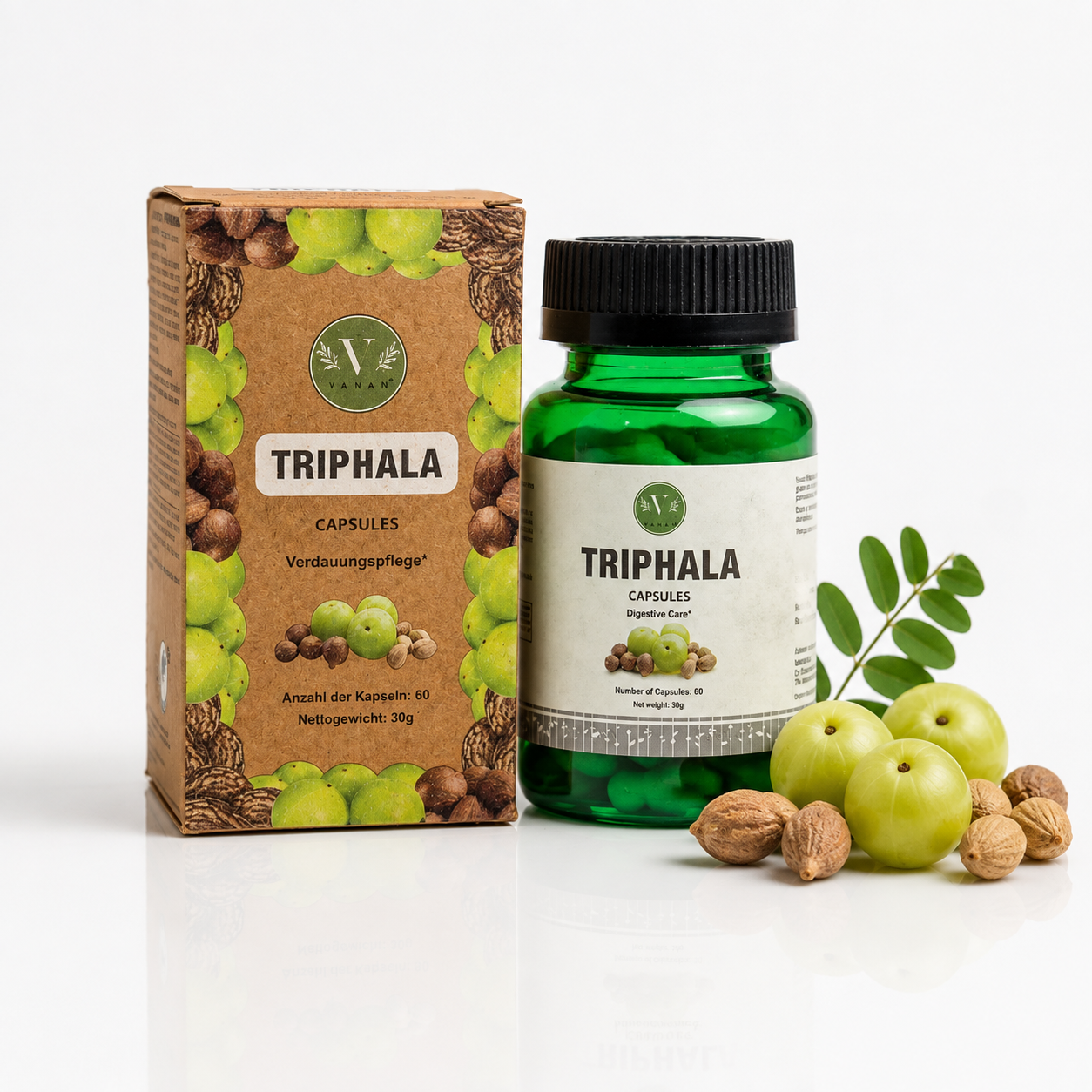
Triphala is a traditional Ayurvedic formulation made from three fruits: Amla, Haritaki and Bibhitaki. The three-fruit combination has a long history of traditional use, while modern research continues to investigate Triphala and specific Triphala preparations.
Vanan Triphala Capsules have also been evaluated in a product-level clinical study involving adults with constipation-predominant Irritable Bowel Syndrome (IBS-C). This article looks at the traditional background of Triphala, the clinical evaluation of the finished capsules, and everyday habits that may complement a healthy digestive routine.
Why Do Bloating and Gas Happen?
Bloating describes a feeling of pressure, fullness, or swelling in the abdomen. Some people may also experience visible abdominal distension. Gas can occur when air is swallowed while eating or drinking or when gut bacteria ferment certain carbohydrates and fibres. Constipation and changes in bowel habits may also contribute to abdominal discomfort or a feeling of fullness.
Large meals, carbonated drinks, certain foods, changes in routine and stress may contribute to occasional bloating. Recurring symptoms can have many possible causes, including digestive disorders.
If bloating is persistent, severe, or accompanied by symptoms such as vomiting, blood in the stool, unexplained weight loss, fever, or persistent abdominal pain, appropriate medical advice should be sought.
Triphala's Traditional Connection with Digestive Health
The name Triphala means "three fruits" and refers to its three traditional botanical ingredients:
-
Amla (Phyllanthus emblica)
-
Haritaki (Terminalia chebula)
-
Bibhitaki (Terminalia bellirica)
The three fruits have a long history of use together in Ayurvedic practice. Traditional knowledge provides historical context for understanding Triphala, while modern research investigates its phytochemical composition and different preparations. Traditional use should not be interpreted as proof that Triphala can treat a digestive disorder or provide the same results for every individual.
What Did the Clinical Study Evaluate?
The finished Vanan Triphala Capsules were evaluated in a 30-day, open-label clinical study involving 35 adults with constipation-predominant Irritable Bowel Syndrome (IBS-C). The study was registered with the Clinical Trials Registry–India.
The evaluation included several measures relevant to digestive symptoms and overall well-being, including:
-
Bloating
-
Abdominal discomfort
-
Bowel habits
-
Quality-of-life measures
The study reported changes in these measures during the 30-day evaluation period.
The study was conducted for 30 days without a placebo or comparison group, and participants knew they were taking Triphala Capsules. Therefore, the results should be viewed in the context of the study design and study population. The findings provide product-specific clinical observations, but they do not prove that Triphala treats or cures bloating, gas or IBS-C.
Everyday Habits That May Help With Bloating
A digestive wellness routine can include simple everyday habits alongside appropriate healthcare.
Eat Slowly:
Eating slowly and chewing food thoroughly may help reduce the amount of air swallowed during meals and can encourage more mindful eating.
Stay Hydrated:
Adequate fluid intake is an important part of maintaining normal bodily functions and healthy daily routines.
Keep Moving:
Regular physical activity is an important part of a healthy lifestyle and can be incorporated into daily routines according to individual ability and preference.
Understand Your Triggers:
Keeping track of foods, meal sizes, eating patterns and other factors may help identify whether certain habits are associated with occasional digestive discomfort.
Major dietary restrictions should not be introduced without appropriate professional advice, particularly if symptoms are recurring or a digestive condition has been diagnosed.
Frequently Asked Questions
1.Can Triphala help with gas and bloating?
Triphala has a long history of traditional use in Ayurvedic practice. The finished Vanan Herbal Triphala Capsules were also evaluated in a 30-day clinical study involving 35 adults with IBS-C, which included assessment of bloating and other digestive measures.
The study reported changes in the bloating score during the evaluation period. However, the study design does not establish that the capsules treat or cure bloating or gas, and individual responses may vary.
2. What did the clinical study assess?
The 30-day clinical study assessed the finished Vanan Herbal Triphala Capsules in 35 adults with IBS-C. The evaluation included bloating, abdominal discomfort, bowel-habit measures and quality-of-life measures.
The findings relate specifically to the studied capsule formulation and evaluation period.
3. What did the study report about abdominal discomfort?
The study summary reported a reduction in the abdominal-pain score by Day 30.
Because this was an open-label, single-arm study, the observation should be interpreted in the context of the study design and should not be considered a guaranteed product effect.
4. When should persistent bloating be checked by a healthcare professional?
Medical advice should be sought if bloating is frequent, persistent, worsening or painful, particularly when accompanied by vomiting, blood in the stool, fever, unexplained weight loss or a significant change in bowel habits.
A supplement should not delay appropriate medical evaluation.
5. How should Vanan Triphala Capsules be taken?
The product label recommends one capsule daily after breakfast. Always follow the current product label and recommended serving instructions.
If you are pregnant or breastfeeding, take medication, have a medical condition or have concerns about persistent digestive symptoms, consult a qualified healthcare professional before using a supplement.
Final Thoughts
Triphala has a long traditional connection with Ayurvedic practice and combines three fruits—Amla, Haritaki, and Bibhitaki—in one botanical formulation. Modern research has also investigated Triphala in human studies. The finished Vanan Triphala Capsules were evaluated in a 30-day clinical study involving 35 adults with IBS-C, with the evaluation including bloating, abdominal discomfort, bowel habits, and quality-of-life measures.
The reported findings provide product-specific clinical observations from the study population and evaluation period. As the study was open-label, single-arm, and limited in duration and participant number, the findings should be interpreted accordingly.
For digestive wellbeing, healthy eating habits, adequate hydration, regular movement and appropriate professional guidance remain important. If bloating or abdominal discomfort is persistent, severe, or associated with other concerning symptoms, seek medical advice rather than relying on a supplement alone.
Disclaimer
This article is provided for general educational and informational purposes only and is not intended to constitute medical advice. Triphala is a traditional Ayurvedic botanical formulation, and this product is not intended to diagnose, treat, cure, or prevent any disease.
The clinical information mentioned in this article relates specifically to the Vanan Triphala Capsules evaluated in the stated clinical study involving 35 adults with constipation-predominant Irritable Bowel Syndrome over 30 days. The findings should not be interpreted as establishing the product as a treatment for IBS-C, bloating, gas, constipation, or any other medical condition. Individual responses may vary.
The study findings should not be attributed to Amla, Haritaki or Bibhitaki individually. If you are pregnant or breastfeeding, have a medical condition, or take prescription medication, consult a qualified healthcare professional before using this product. Always follow the recommended serving size and usage instructions provided on the product label.


